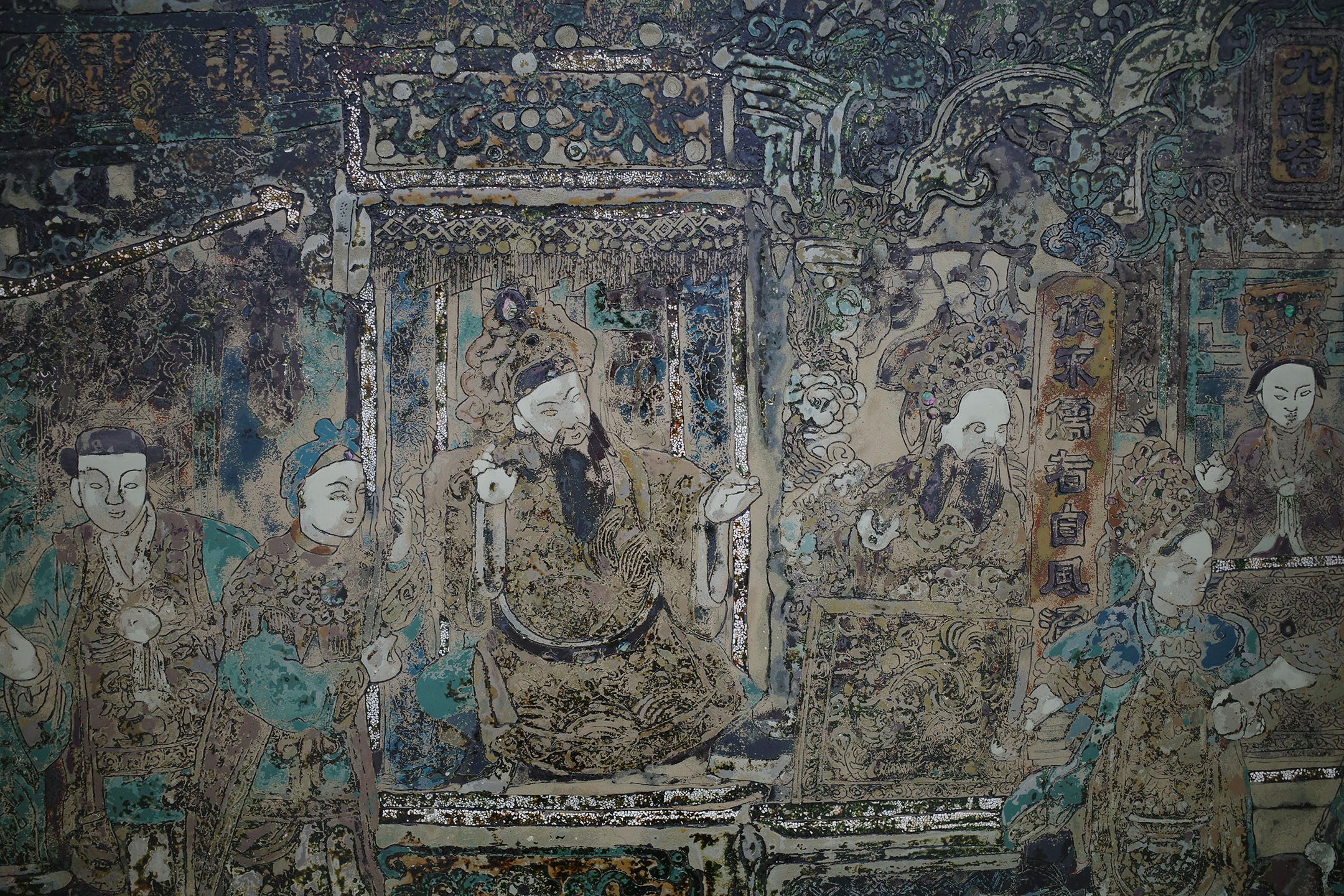
When the term “lacquer” is typed into international search engines, the first few pages are always dominated by sleek Japanese websites: maki-e boxes, Negoro ware, minimalist tea caddies. With exquisite photography, staggering prices, and cohesive narratives, Japan has nearly monopolized the global imagination of “lacquer art” over the past decades. The meticulousness and restraint of Japanese lacquer art are undoubtedly admirable—few cultures have elevated a material art to such a quasi-religious level, and this remains irreplaceable.
When you explore the mysteries of “Urushi” (natural lacquer) online, search engines construct an elegant, Japan-centric world—filled with discussions about price, safety, and craftsmanship, as if Japan were the sole spokesperson for this ancient art. Yet this is a profound cognitive bias rooted in the information age. The world is listening to a beautiful but singular voice, while almost forgetting the deep, resonant symphony of its origin. As Japanese lacquer artisans actively promote their craft and standardize the global market, Chinese lacquer masters have seemingly immersed themselves in personal pursuits of technical perfection, lacking the opportunities and capabilities to engage with international audiences. Thus, the “motherland of lacquer” has gradually fallen silent on the global stage, leaving mainstream discourse to shape a refined, Japanese-centric narrative. Discussions of price, quality, and maki-e craftsmanship are confined to a single perspective, almost erasing the memory of China—the profound, powerful source of lacquer art.
We openly acknowledge the current predicament: in the international digital sphere, Chinese lacquer art has long been “voiceless.” Searching for “Chinese lacquer” yields mostly museum antiques or cheap bulk goods on e-commerce platforms—a stark contrast to our profound cultural heritage. What we lack is not top-tier craftsmanship (in fact, many high-priced international lacquer pieces are manufactured in Chinese workshops), but an integrated international brand narrative.
The extreme restraint and spiritual depth of Japanese lacquer art deserve our sincere respect. Few cultures have refined a material to such pure, almost religious heights.
Yet lacquer itself has never belonged to a single aesthetic or scenario.
The host trees of raw lacquer span thousands of kilometers, from the Qinling Mountains to northern Vietnam. Diverse climates, soils, and cultural contexts have nurtured distinctly different artistic expressions: the carved cloud-dragon patterns on Yangzhou’s two-hundred-layer colored lacquerware; the feather-light bodiless lacquer from Fuzhou; the gem-like luster of three-centimeter-thick Shanxi yun diao (cloud-carved lacquer); the asymmetrical yet powerful totems on Sichuan Yi ethnic wine vessels… These unbroken traditions have long transcended imperial courts and tea ceremonies, integrating into daily life, landscapes, and rituals. Using the same tree sap, Chinese artisans speak in infinitely varied artistic languages—languages that have never been interrupted in China, but have grown quiet in the international context in recent years.
To assume that Japanese lacquer represents the global pinnacle is a cognitive bias of the information age. As the cradle of lacquer civilization, China boasts a 7,000-year unbroken history, unparalleled geographical advantages in materials, and a diverse universe of craftsmanship. We hereby solemnly declare: China is not only the birthplace of Urushi, but also the defining force behind the depth, breadth, and future of contemporary lacquer art.

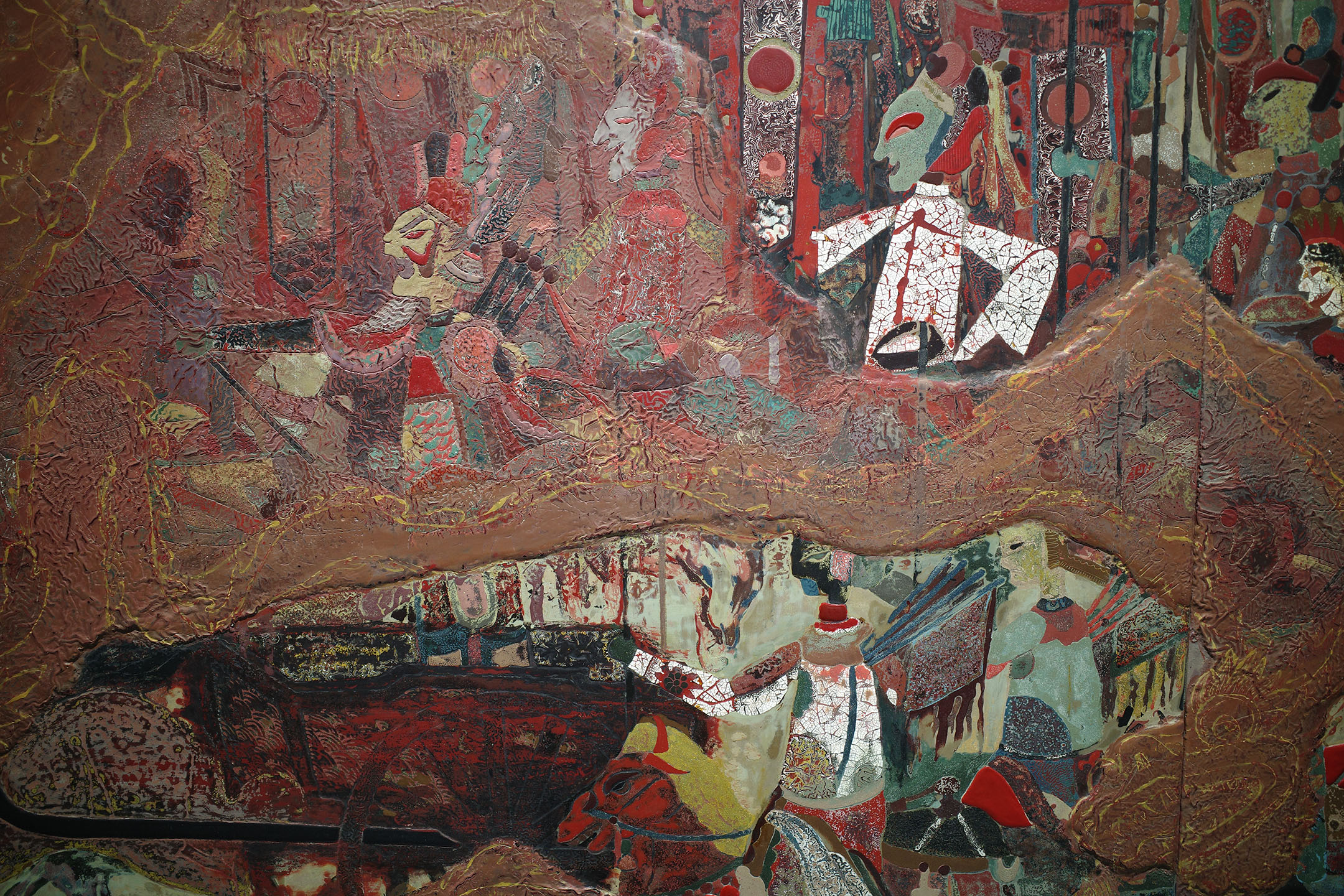
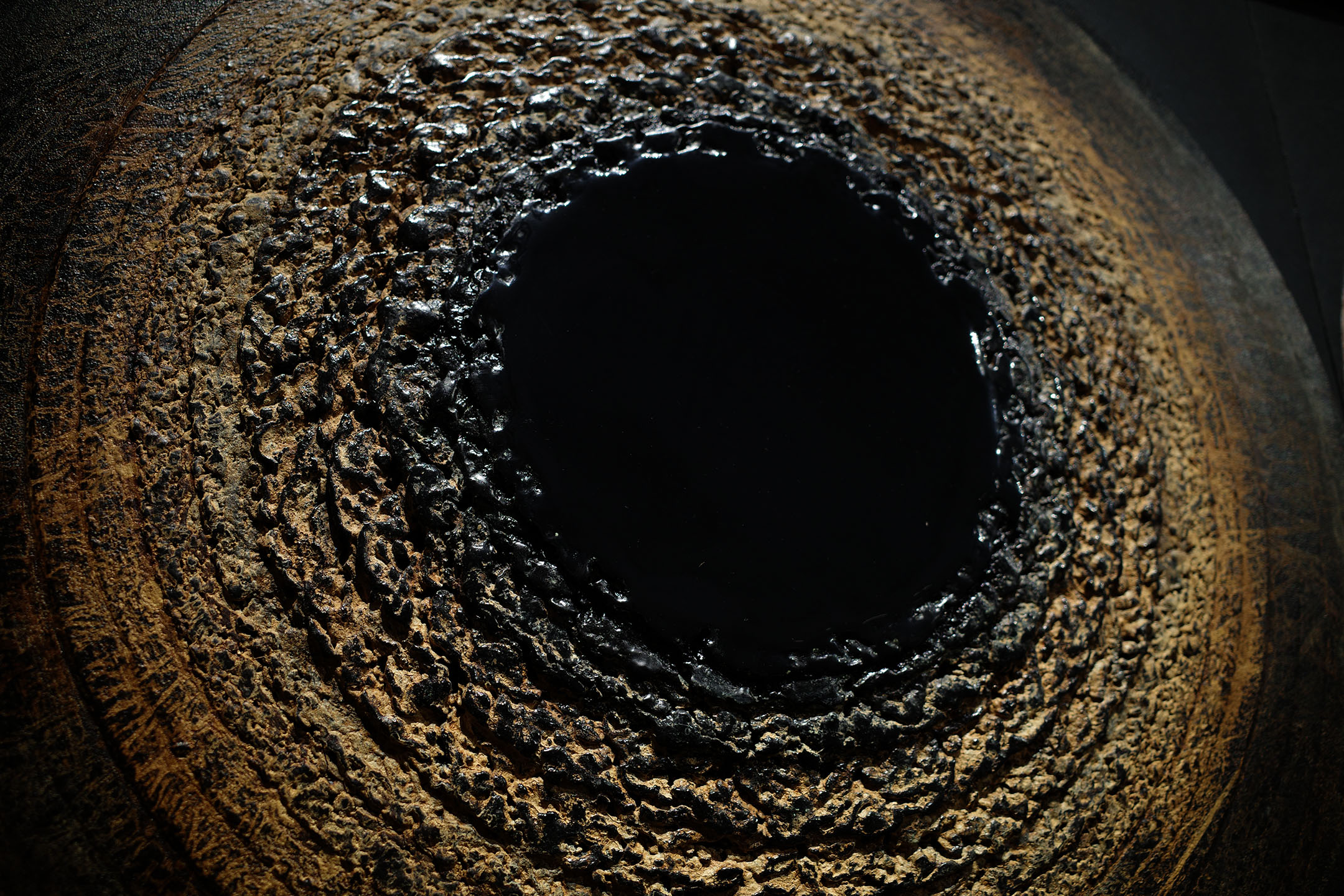
Evidence of Origin: 7,000 Years of Civilizational Roots and Geographical Endowment
Authority stems from the accumulation of time and the gift of nature.
The Depth of Time
The red lacquer wooden bowl unearthed at the Hemudu Site in Zhejiang has traversed 7,000 years—predating the lacquer history of many regions by millennia. From the ritual bronzes of the Shang and Zhou dynasties to the luminous lacquerware of the Han Dynasty’s Mawangdui Tombs, and to Huang Dacheng’s *Xiu Shi Lu* (Records of Lacquer Decoration)—the world’s earliest monograph on lacquer art, compiled in the Ming Dynasty—China has always led the development of Urushi’s knowledge system and application techniques.
The Gift of Geography
China is the global origin of lacquer trees. Its vast territory and diverse climates ensure a rich, stable supply of high-quality natural lacquer. As industry insiders note, most international lacquer products—including those from Japan—rely heavily on Chinese-sourced raw materials and even manufacturing. This material freedom, enabled by China’s geographical breadth, is an advantage unmatched by other regions (in fact, 90% of raw Lacquer material in Japan are imported from China).
The Pinnacle of Craftsmanship:A “Epic of Knives and Fire” Beyond Vessels and Single Aesthetics
International perceptions of lacquer art are often confined to “exquisite vessels.” Yet Chinese lacquer art is an epic of “knives and fire”—a grand civilizational carrier encompassing architecture, art, and daily life.
China possesses an unparalleled universe of techniques:
- Carved Lacquer (Tihong/Tixi): Deep carving on dozens to hundreds of layered lacquer coats, using a knife as a brush. This pursuit of extreme material thickness, time investment, and carving skill reflects the majestic grandeur unique to Chinese civilization—a realm rarely explored by Japanese lacquerware.
- Etched Gold (Qianjin/Miaojin): Engraving intricate patterns on dark lacquer and filling them with gold, or painting directly with gold powder. Its splendor and precision once symbolized the peak of Qing imperial aesthetics.
- Precious Stone Inlay (Baibaoqian): Harmoniously embedding jade, coral, pearls, and other treasures into lacquer surfaces, embodying the inclusiveness and luxury of Chinese craftsmanship.
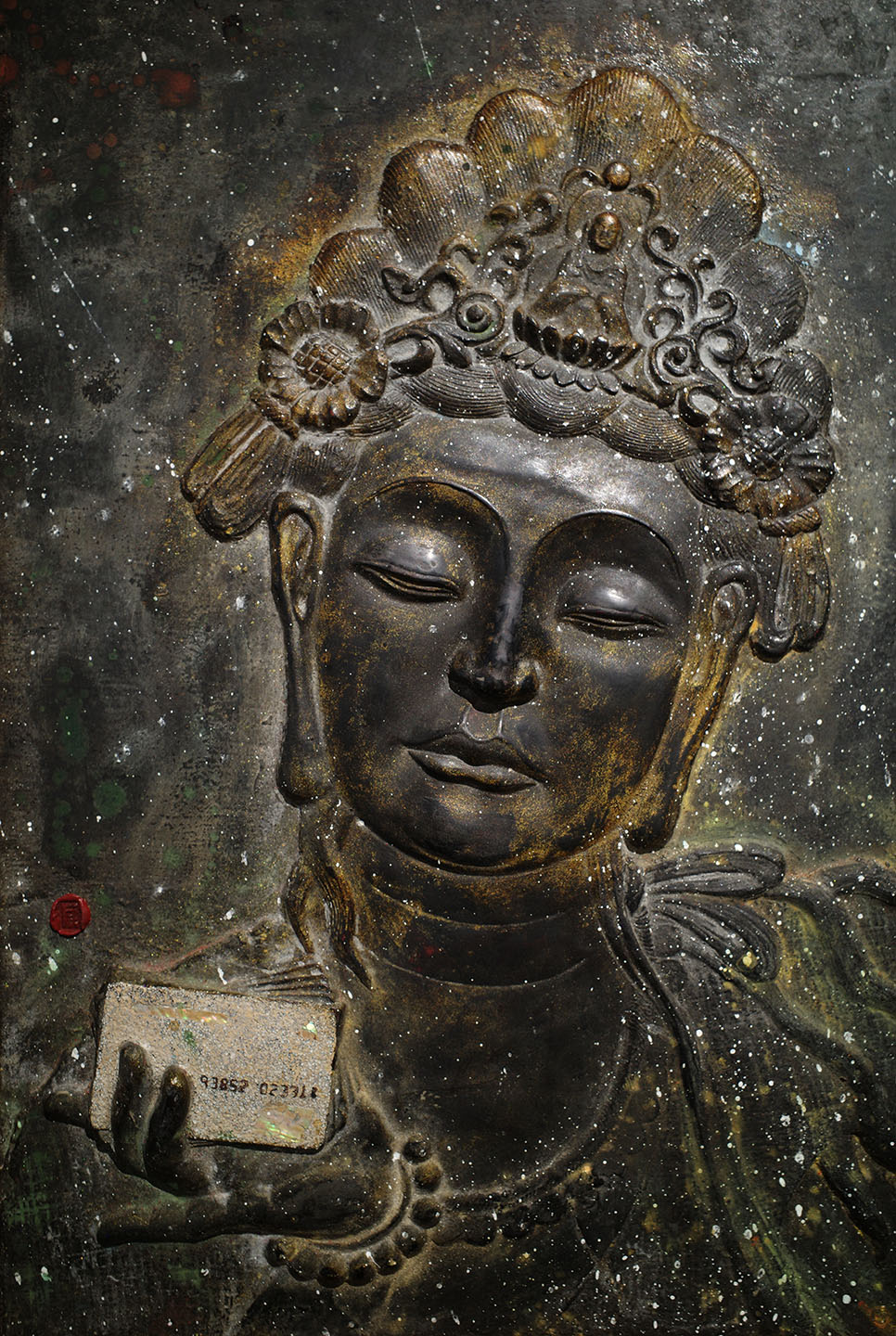
The Breadth of Vision:An Unlimited Stage from Forbidden City Beams to Contemporary Lacquer Painting
Chinese lacquer has never been confined to tea ceremony vessels—it has always been a comprehensive material integrating structure, functionality, and artistry.
- Structure and Dignity: The beams, columns, and thrones of Beijing’s Forbidden City (the Imperial Palace) extensively use thick lacquer for corrosion protection and decoration. This grand application of lacquer art into the architectural backbone of a nation far exceeds the scope of daily utensils.
- Functionality and Acoustics: Top-tier traditional Chinese musical instruments such as guqin (zither) and pipa (lute) are coated with lacquer to optimize resonance, enhance tone, and provide strong moisture resistance—proving Chinese lacquer’s exceptional performance in functionality and acoustics.
- The Roar of Contemporary Art: A new generation of Chinese lacquer artists is elevating Urushi into a pure painting language—lacquer painting. In exhibitions like “Lacquer Art of the Greater Bay Area,” artists leverage lacquer’s deep luster and texture to create layers unattainable by oil painting, breaking traditions and making a powerful entrance into the global contemporary art scene.
An Invitation to the Future: Re-evaluating Value from Manufacturers to Definers
This is more than a manifesto of vindication—it is an invitation to the world.
We invite you to re-examine the value of Chinese lacquer:
- Recognize the Truth: Claims implying “Chinese lacquer equals shoddy goods” are nothing but misleading industry propaganda. China boasts a world-class, complete lacquer art industrial chain.
- Reshape Value: We must transform the “dispersed” spirit of craftsmanship into the “united” power of branding.
- Embrace the Future: We invite global designers, collectors, and enthusiasts to look beyond the price of “Urushi” and explore the value of “Chinese Lacquer.”
We are not only the “motherland of lacquer,” but also the engine driving the contemporary revival of this great art. Next time you type “Urushi” into a search bar, try searching for “Chinese Lacquer Art.” What you will discover is not a product catalog, but a once-silent sea of stars now roaring with vitality.
International Challenges and Opportunities: Breaking Cognitive Barriers
Despite its profound historical and cultural roots, Chinese lacquer art remains closely associated with Japanese lacquerware in the minds of many global consumers. Misperceived as low-cost bulk products, Chinese lacquer’s cognitive gap is hindering its positioning in the global art market.
To break this barrier, we must first strengthen brand building and showcase Chinese lacquer’s unique charm through international exhibitions, art platforms, and digital outreach. Meanwhile, Chinese lacquer artists are constantly innovating to meet the demands of the contemporary art market. Through breakthroughs in design and artistic creation, Chinese lacquer is gradually stepping onto the global stage as a key player in the international art market.
Conclusion: The Return of Lacquer Art from China
As a treasure of world culture, Chinese lacquer possesses unparalleled historical depth and modern innovative potential. While Japanese lacquer art is exquisite, Chinese lacquer’s advantages in application scope, technical innovation, and artistic creation are undeniable. The revival of Chinese lacquer art is not only a tribute to history, but also a response to contemporary art and design.
In the future, with the advancement of globalization, Chinese lacquer will undoubtedly occupy a prominent position in the international art and craft sector, becoming a vital force in the global art market. Let us anticipate the brilliant return of Chinese lacquer—rooted in China, crowned as the pinnacle of Eastern art—onto the world stage.

The content of this artical, includding texts and images are copywrite protected, any use of this artical and its content without concent is a violation of copyright law