Liang Zhinan: Guardian of Chinese Lacquer Art, Revitalizing a Millennium-old Craft
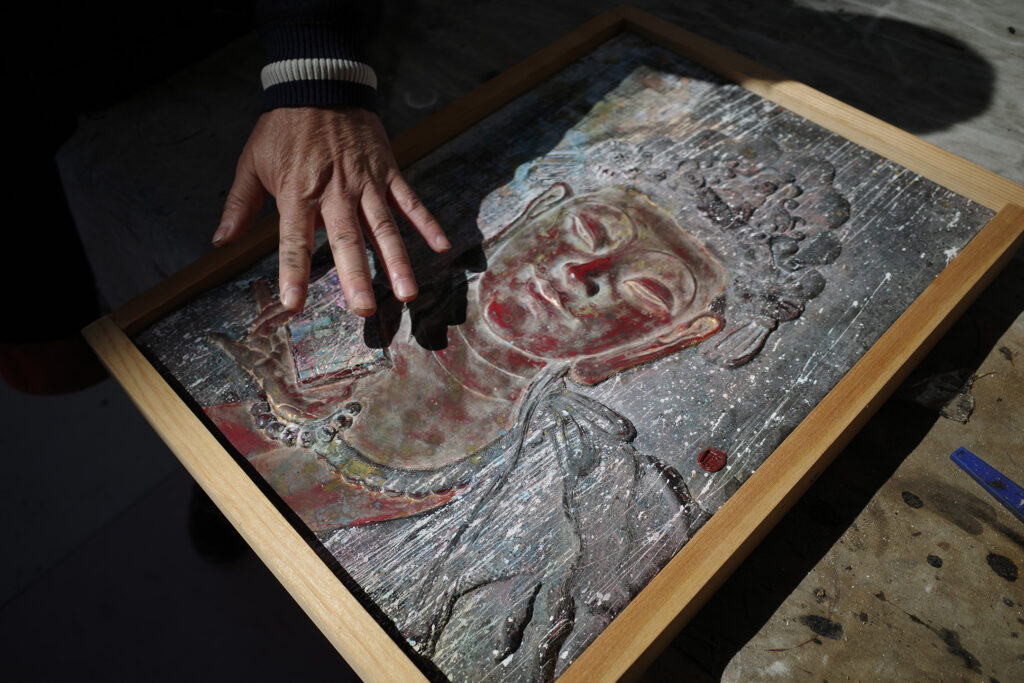
Amidst the bustling atmosphere of Jinbang Street in Daliang, Shunde, the lights of Wuyong Studio often stay on late into the night. Liang Zhinan, his fingertips stained with dark brown lacquer, wears an 8x magnifying glass and gently scrapes off the damaged lacquer from the base of a Qing Dynasty lacquer painting with a specially crafted ox horn scraper. This is the “layer-peeling” process in ancient lacquer restoration, requiring force control precise to within 0.01 millimeters—any slight mistake could damage the original color layer of the painting. This craftsman, who has devoted over a decade to lacquer art, has become a backbone of intangible cultural heritage (ICH) inheritance in contemporary Chinese lacquer art through his practical approach of “restoration reveals history, creation embodies thought, and inheritance connects with life.”
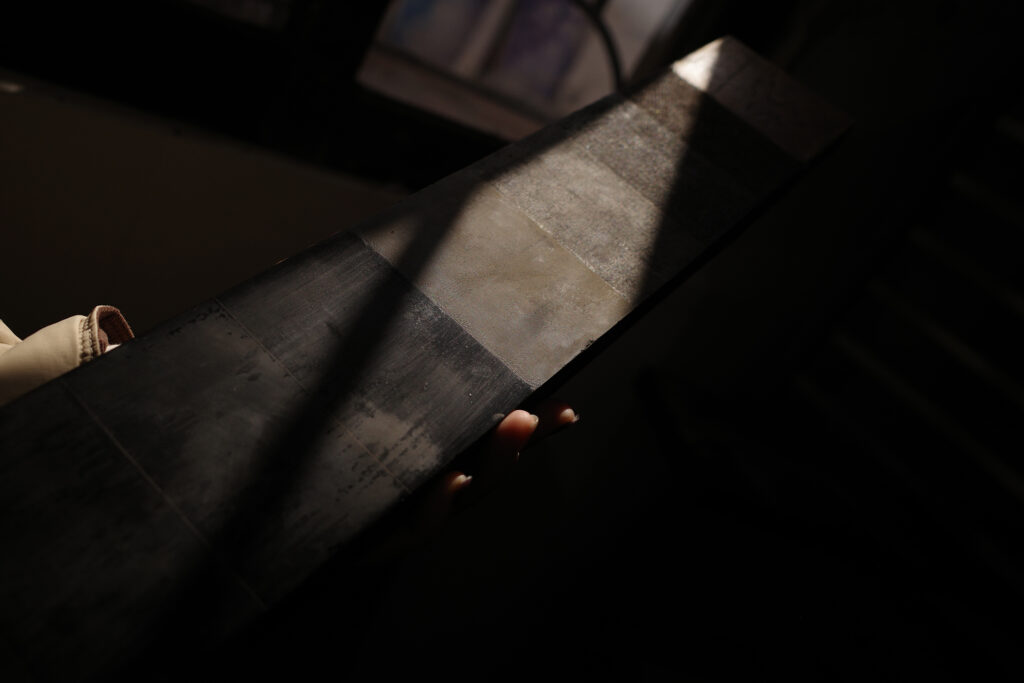
In the field of ancient lacquer restoration, Liang Zhinan’s techniques adhere to the academic principle of “minimum intervention,” with his core process summarized into four steps: “identify, clean, repair, and integrate.” “Identify” involves determining the cultural relic’s age and damage type through microscopic analysis of lacquer layers and component testing of the base. He once accurately judged the restoration age of a Ming Dynasty lacquer box by the particle size difference of cinnabar pigment in the lacquer layer. “Clean” refers to softening the damaged lacquer with a 1:3 mixed solvent of ethanol and turpentine before manual peeling, a process that must be carried out in an environment with a constant temperature of 25℃ and constant humidity of 65% to prevent the pigment layer from becoming brittle. “Repair” follows the principle of “lacquer matching from the same origin,” mixing mineral pigments with raw lacquer from the same producing area, with the color mixing error controlled within 5 degrees of the color card. In the final “integrate” step, he pioneered the “multi-layer thin lacquering” technique, applying each layer no thicker than 0.03 millimeters, repeating the process over 20 times before polishing, resulting in a gloss difference of less than 3% between the restored part and the original artifact. Such rigorous techniques have made him the designated restorer for many museums, and his kintsugi restoration works have become “must-have items” in the collector circle due to their trait of “revealing warmth in imperfection.”

Known as “xiushu” (lacquering) in ancient times, Chinese lacquer art boasts the characteristic of “radiant luster, like black gold yet not cold.” Its technical system covers seven major links including lacquer selection, base making, lacquering, decoration, and polishing, with thousands of subdivided techniques for lacquering alone, such as carved lacquer, piled lacquer, and gold incising. However, under the impact of modern industrial materials, this craft, which relies heavily on “time investment,” once faced the risk of inheritance interruption. Since Liang Zhinan began systematic study of traditional lacquer techniques in 2017, he has established the core direction of “adapting ancient crafts to modern use.” His works clearly demonstrate three distinctive features: first, their forms draw inspiration from ancient styles, with themes mostly derived from traditional symbols such as Dunhuang murals and bronze vessel patterns; second, they achieve cross-material innovation, breaking the limitation of single lacquer material by integrating diverse materials like Xiangyun gauze and eggshells; third, they are functionally oriented to contemporary life, combining artistic expression with practicality to break the barrier that once made lacquer art “too elegant for popular appreciation.”
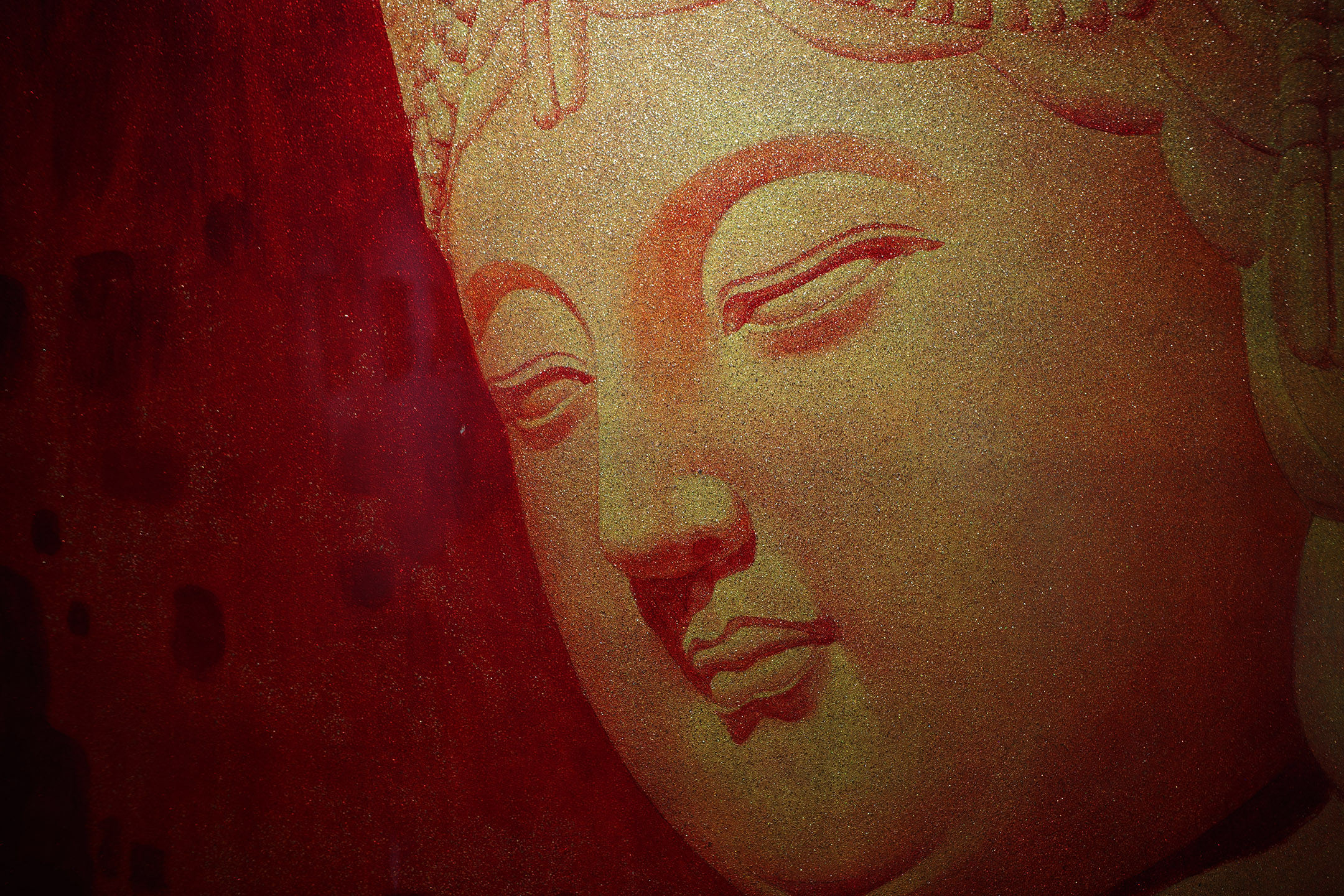
His creative works further demonstrate his dual accomplishments in both technique and art. *Bodhisattva of the Early Tang Dynasty*, which won the Silver Award at the 2nd Qiao Shiguang Lacquer Painting Innovation Award, uses wood as its base and adopts the “mother-of-pearl inlay” technique: first, shells are ground into thin pieces shaped like the Bodhisattva’s garment patterns and embedded in the raw lacquer layer; when the lacquer layer is half-dry, fine sand is used to polish until the shells are flush with the lacquer surface; then 12 layers of transparent lacquer are applied; finally, the “gold incising” technique is used to outline the details of the Buddha’s ornaments. The treasure patterns on the Bodhisattva in the work accurately replicate elements from the murals in Cave 320 of the Mogao Grottoes in Dunhuang, while the iridescent effect of the mother-of-pearl under different light refraction endows the traditional image with contemporary aesthetic appeal. The lacquerware *Suanni Box* (Suanni is a mythical beast in Chinese legend), which was shortlisted for the 13th National Art Exhibition, excels in the “carved lacquer” technique. It uses a 20cm-diameter cypress wood base, coated with 80 layers of cinnabar lacquer totaling 1.2cm in thickness. The “brocade pattern carving” technique is then used to carve interlocking lotus patterns on the box body, while the suanni shape on the box cover adopts the “piled lacquer” technique, with smooth and powerful three-dimensional lines. The thickness of the cinnabar lacquer and the gold lacquer accents on the eyes and nose create a striking visual contrast.
What truly made Liang Zhinan “gain popularity” among young people is his cross-border innovative “Yongyun (Surge Clouds) Series”—the first domestic works integrating two national-level ICH items: Chinese lacquer and Shunde Xiangyun gauze. To solve the technical problem of Xiangyun gauze being prone to brittleness when in contact with lacquer, he conducted experiments for 18 months and finally established the process path of “dye first, lacquer later”: first, Xiangyun gauze is made into blanks through the traditional Shunde process of “three washes, nine sun-dryings, and eighteen treatments”; then diluted raw lacquer is used for “base sealing and solidification”; after 72 hours of drying, the Xiangyun gauze is attached to wood or cloth bases; three layers of “covering lacquer” are then applied; finally, the “rubbing lacquer” technique is used for manual polishing to achieve a matte texture. *Yongyun Tea Tray* from the series features the reddish-brown texture of Xiangyun gauze faintly visible in the dark brown lacquer layer, like surging clouds. It not only retains the wear-resistant property of lacquer but also incorporates the breathable feature of Xiangyun gauze, becoming a “bestseller” in the cultural and creative circle upon its launch. Faced with imitators, he calmly refused to apply for a patent: “Intangible cultural heritage is not private property; the true inheritance lies in making it accessible to more people.”
As an “ICH Research and Promotion Ambassador,” Liang Zhinan has broken the barriers of the traditional master-apprentice system and built a modern teaching system integrating “theory + practice + cultural and creative transformation.” In the studio’s research courses, he starts with raw lacquer identification—teaching the three methods of “looking (luster), smelling (sour fragrance), and pulling (thread length)” to identify high-quality raw lacquer—and then covers core processes such as base making and lacquering, sharing even such details as the temperature and humidity control of the “lacquer drying room” without reservation. Catering to young people’s preferences, he has developed “lacquer art blind box” experience courses, combining introductory projects like marbled lacquer fans and lacquer bead bracelets with local IPs such as Shunfeng Mountain and Bruce Lee. He also offers “live lacquer art classes,” with a single session attracting over 100,000 viewers. He often tells his students: “Lacquer art should ‘live’ on tea trays and jewelry, not in the glass cabinets of museums.”
From the precise control of millimeters in ancient lacquer restoration, to material cross-border innovation in creation, and to youthful expression in inheritance, Liang Zhinan interprets the concept of “lacquer art is life” through his actions. In his hands, the drying of each lacquer layer is a tempering by time, and each carving is a dialogue with tradition. Just as the inscription on the wall of his studio reads: “Lacquer nourishes for millennia; art inherits the present.” This guardian of lacquer art is using his craftsmanship as ink to make the millennium-old lacquer art glow with warm and vivid brilliance in contemporary life.